
PERFORMANCE GUIDELINES: 9. WALL AND CEILING FINISH
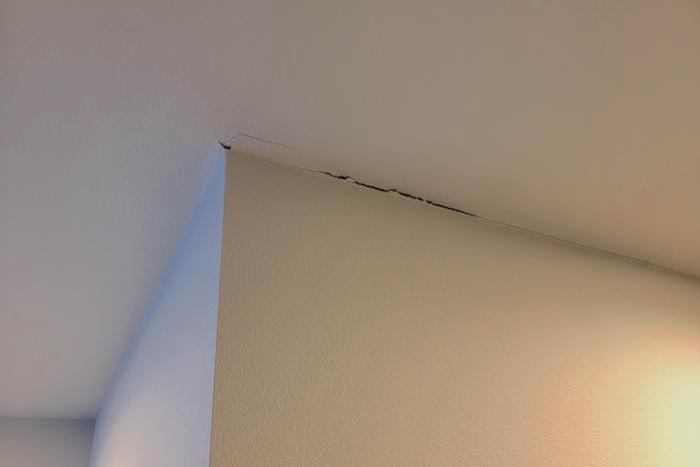
9.5 Ceiling/Wall Joint Separation (Often Referred To As "Truss Uplift")
Acceptable Performance/Condition
The junction of inside wall finishes and ceilings should be constructed to minimize excessive cracking or wall/ceiling separation.
Truss uplift is a term often applied to a condition where the bottom chord of wood roof trusses bow or arch upward causing the ceiling drywall that is fastened to it to become separated from the wall finish. Differences in the temperature and moisture content between the top and bottom members of trusses can cause seasonal movement of the bottom chord.
The condition cannot always be prevented but can be controlled by good design, good attic venting and by “floating” the ceiling drywall near partitions.
Similar damage can occur due to downward movement of the wall as a result of settlement of interior wall footings or shrinkage of the framing lumber.
Warranty Coverage
- 12 months In-Home
- 15 months Common Property
Damage resulting from maintenance not conducted by the owner in keeping with maintenance documentation provided to the owner by the warranty provider or builder, or from additions, deletions or alterations made by the owner is not covered under warranty.
Claim Response
Wall ceiling junctions not meeting the Acceptable Performance/Condition must be rectified.
Where repairs are required, colour, finish or texture may not have an exact match.
Seasonal conditions may delay the timing of repairs.
Using a repair method that conceals the problem is acceptable (i.e. Crown Molding).
Maintenance Tip
No maintenance tips available
Documents
No documents available